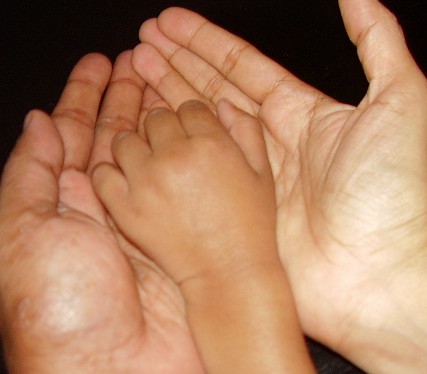
Rising Rates of Divorce

Are Alarming Increase in Divorce Rates a Sign of Progress or Regress?

More marriages are seeking the path of separation rather than the harder path of working together towards solutions. The breakdown of the institution of marriage can lead to broken disjointed families and consequently lay the foundation for many societal problems in the future.

Why are we seeing an increase in the divorce rates?

There are several factors including an increasing societal tolerance towards broken marriages, an increased awareness of personalities and personal spaces, a lower tolerance level, increasinf frustration levels, emotional and financial insecurities, impulsive decision making, increased violence (verbal and physical), lack of clarity over value or ethical systems especially pertaining to the person, couple, family and society.

Personality issues such as aggression, lack of a compromising spirit (give or take), wanting to always win, and lack of parental and family support either due to physical distance or emotional distance can make the couple rapidly reach a stage where divorce seems a reasonable alternate to working out solutions.

Low frustration tolerance can be a major factor where any disagreement between couples is considered as a personal grudge leading to impulsive or aggressive outbursts irrespective of young children being around, lack of tolerance for a difference of opinion, or even a “If you can do like that then why can’t i do like this” attitude. Low frustration tolerance can shatter the whole sensitivity of any close relation.

Emotional and financial insecurities where the concerns of a nuclear family predominate and caring for elders is considered a burden even in terms of health or survival aspects. A lack of empathy for the partner that may be driven by one’s pwn state of “suffering”, counting how much or less each partner contributed to the family expenses or maintenance, unhealthy comparisons in lifestyle with relatives/friends to the point of excluding or undermining one’s own strengths and comforts become added burdens that contribute to an unhealthy atmosphere.

Impulsive decision making in terms of involving a third person (usually family members) even in minor fights between couples, decision to involve legal, media or police systems to pose threats to the partner, inability to introspect or analyze one’s own actions that may contribute towards the friction and make meaningful changes, and using young children as peace makers by complaining to them on each other (that burdens and confuses the young minds) are unhealthy trends that come back to bite later….with a big bite, too.

Increased Violence both physical or verbal can stress the home environment by noise pollution, terror, unhealthy living environment and a pervading sense of fear. Degrading each other making one feel unwanted or rejected is also a form of violence or abuse. Children in such families can develop wide variety of emotional or academic problems (bed wetting, lying or stealing behaviors, reduced concentration, high anxiety or fears that impairs ones ability to learn and retain academic or other information).

Lack of clarity or even absent value or ethical systems are also a major factor in the lack of unity in the family system. More weight given for material comforts rather than teaching children sets bad examples. Eating out or family trips that are more a prestige issue than an occasion to bond, focusing more on talking rather than actions, focusing on short term gains rather than long term security or savings for the future of the family teach certain values to the children. A lack of concern for the elders also sets a bad example. The feeling that spending more equates to a better life brings in its own attendant ethical and moral values.

The family can work together if importance is given to the overall functioning of the family including clear roles and responsibilities. The role of the woman in the family is a more complex role that has assumed more complexity as families go nuclear. The pressure is on the woman to adapt, often unfairly so, and the woman is expected to be in a constant state of adaptation and compromise- whether it is related to personal habits, academics, work. The Male or husband has to play the role of a bridge or buffer that balances expectations of the partner with what is expected of the partner. It is important to realize that marriage involves changes from everyone as acceptance of the partner as an equal member grows.

A united family requires flexibility, adaptability and a willingness to find practical realistic or pragmatic solutions. Change does not happen overnight. It is a slow process. Frictions and disagreements are common in all marriages but the way you work on the disagreements determines the health of your marriage.

The future of the family needs openness, a willingness to discuss difficulties, healthy involvement of family members in problem solving, breathing spaces for privacy. A healthy family is possible if everyone works towards it without judgments and if everyone realizes that neither the woman nor the male are just stereotyped pictures but humans in their own rights.

Loneliness in a marriage!

Friction and disagreements occur in all relationships including marital relationships. As the family structure becomes increasingly nuclear, either by choice or migration to other countries or cities, or as a result of the choice of partner (outside of the community), there is an increasing lack of support for couples in marriage.  The possible lack of a close confidant beyond the immediate family can lead to increasing stress levels beyond tolerance and end in a feeling of loneliness and depression.

Let us look at some of the factors that contribute to this loneliness. An important factor is distorted and faulty communication. This usually develops over a period of time where the couple stops listening to each other, sees the other partner as someone who is degrading or looking down on them, an increasing use of abusive or aversive behavior, insistence on their words always being correct, and rather immature and childish behavior. Provocations can include the behavior of the parents of the partner, the child rearing practices or even the inability to conceive. However, these build up over a period of time and there can be multiple provocations to settle into a feeling of constant mistrust…and failing to hear or understand beyond the words.

Finances can be a source of friction for any relationship and especially in a career oriented relationship with both partners working. Several issues on the handling of money can arise including who is spending how much and on what, how much is each partner contributing to the family, how much expenses and what expenses are reasonable, who pays the loans, how much are you sending your parents, all can become points for friction. The issue of my money, your money crops up leading to more friction.

Another important point of friction is the amount of time spent together.Each partner may have their own interests, preferences and pressures where the time spent together gradually reduces. Several issues come in including ” we are in a marriage, have lived together for long and know each other, why do we need to spend time together”, taking each other for granted, why do we need to spend time together like we were courting each other. However, life is dynamic and keeps changing…and each event will require some planning, coping and adjustment…and some time spent together.

Career choices can also lead to friction. A partner transferred to another city or town or country can lead to an upheaval of the life of the other partner. The other partner who might probably be well settled suddenly has to accommodate to a possible loss or change in career paths, limited career options, the need for additional qualifications. All of these can lead to stress and friction especially if one partner has to stay back at home. The potential for depression is high in such instances unless both partners work together to prevent any breakdown.

The kind of stress faced by couples with young children is different where one spouse often has to give up a career to become a full time carer, becomes financially dependent on the partner, faces a real or perceived lack of support in caring, coupled with inadequate or irregular sleep patterns. If the kid has any special need (physical or psychological), the stress and friction in the relation of the couple mounts if adequate support is not there. If the wife prefers to continue working within months of arrival of the infant (for whatever reasons) several issues like taking care of the baby, feeds, creches, ayahs, dropping and picking up the baby, safety etc can cause additional stress.

Last  but not the least, most couple do go through a phase of comparison with known people, “See, she left her job to take care of the baby” “He always comes home early”, etc. One spouse comparing the partner with other people, in an already tensed environment where both partners are trying to adapt can only lead to more stress.

The solution is complex and has to consider multiple factors. Both partners definitely need to take time to be with each other…fit it into your schedules. Talk more than less to each other, keep asking about each other and how they feel, be flexible and available, and seek immediate help if the stress seems to be overwhelming. Building a social network that can absorb the stress and provide solutions will be useful. However, just arguing and blaming each other and leaving the issues without a solution can only complicate and lead to depression in the long run.

Partners have to learn to live with each other and not just live together.

Expecting too fast an adjustment from your wife-Relax

In a new marital relationship, even if the people know each other before, there is a period of adjustment that is needed. This period can become stressful if the spouse (husband or wife) has to adjust and compromise with the immediate partner as well as the family members. In India, more often than not, the wife moves in with the husband and probably his family by extension. The wife, thus faces the brunt of the adjustment as she tries to meet the spousal expectations, her expectations and the expectations of the family.

The first year of the marriage forms the basis for the foundation for the couple to develop closeness- emotional, physical, bonding, attachment.  However, marriages seem to be breaking apart even in the first year.

If you had an arranged marriage, it takes time for your wife to adjust to you as a spouse or husband and to adjust to your family members. If the family does not give the space to grow into the relationship, and rushes to make judgments that are unpleasant and uncomfortable, then the foundation to build upon becomes weak. The relationship moves more towards preventing and reacting to situations than a real growth in the relationship. Comments such as “She does not mix well with people, she does not cook well, she is not social, she talks back to my parents, she has an attitude etc etc” only serve to make the atmosphere more unpleasant than bring about any real change.  It is important for you, as a husband, to understand that you are the bridge through which the bonding between your wife and parents is formed.  If you are not skilled enough or take time to balance this delicate situation, it might create friction between you and your wife as well as both families. It is important for you to understand that your wife has spent a considerable part of her life growing up in a different family that may have a different culture, different personal habits, food habits etc. It might be difficult for her to give up or break habits and adjust  as much as it might be difficult for you to accept a set of behaviors that are different from your own.  Your wife should not end up feeling that she is like a lab animal that everyone keeps scrutinizing every minute just to make unhealthy inferences or to draw conclusions. It is very important that you, as a husband,  should still understand the complexities of your wife and parents living under one roof peacefully.  If you are a single child, the responsibility becomes even more as you try to give and take from everyone without making anyone feel isolated

It may be easy to manage a team as a team leader, or run a complex business with its unpredictable loss and profits, but it is not easy to maintain harmony at home. Logic and reason helps to score points in an argument but you need to consider if winning the argument is more important than understanding the other person. This requires an ability to listen and empathize. When your wife expresses something to you about your parents, it does not always mean she is complaining. It could be that she is sharing with you to improve her understanding and looking for an emotional connection. We need to remember that your wife has not spent as many years as you have with your parents to understand them well. Her relationship with your parents will be driven in parts by her relationship with you and what she sees in you that reflects your parents. The more intimate and connected you are with your wife, the easier it is for your wife to relate and understand your parents.

There is also the need to manage your parents expectations, especially the feeling of a mother that her son is now being “taken away” from her by the new young woman. Your mother is no longer the primary care giver and that is a transition that can be difficult for some.  It is important for you as a son to understand your mother and work to balance the relationship.

It is not necessary that the whole family has to always go out together.  As a young couple, you and your wife do need the space to develop an understanding of each other when both of you can focus just on each other.  When both of you understand each other, both of you can work together to stop any negative intrusions into your life. These can sometimes be minor for your eyes but possibly intrusive for your wife, maybe there are no bad intentions behind it but is perceived as such. For example, if your mother selects a dress your wife should wear for a function while you wife wishes to wear something else. It is important for you to see the view point of your wife as well. Consider that she may have her own wishes and desires. Work out minor adaptations that everyone can be comfortable with. Of course, this does not always happen very easily!

It is also your role to encourage your wife and parents to have a clear expectation from each other to build peace and bonding. The couple living by their own in a separate house is no longer considered taboo. Though physical absence may create a distance, sometimes it is necessary to escape a stifling atmosphere and to create the calm to think in a balanced manner.

What is needed for a relationship to build, maintain and grow is clear expectations that are realistic, practical and possible

Can’t Relate to Spouse?

Can’t relate to your spouse? Time to reflect before the ties loosen!

Divorce rates are increasing alarmingly with more couples thinking it is easier to walk away than resolve or work through differences. There is a need for couples to start analyzing themselves about the positive contributions and stressors they contribute to the relationship with their spouse. Self analysis or introspection is a first step in working towards a better relation even before seeking professional help from external persons. Self reflection allows for course corrections in a non threatening manner.

How can this be done? It can be started if you as a person are willing to work at improving yourself constantly. This would mean that you start by accepting that there is scope for improvement within yourself and that you may not be perfect. This does not mean that you have to think of yourself negatively. If you, by nature, are a person who often looks for external factors or reasons as to why your progress is blocked, the process can be long drawn. The process of internal reflection allows you to identify and be aware of factors that are blocking growth and allows you to see which factors need to be changed and how. Remember, change starts from yourself!

What are some of the common barriers that contribute to a relational strain?

1. Your ability to empathize with your spouse. This requires an effort as empathy also depends on your emotional closeness with the other person, the number of years you have spent together, your understanding of the person, and the ability to accept a view point that may be different from your own.

2. Preparedness for intimacy in a relationship This is the extent to which you limit or extend your level of intimacy in terms of physical, psychological, emotional or sexual aspects. If you are a person with limitations in terms of “Only if I want” “Only if I see an advantage for me”, “Only if you give into my demands” etc, then there is a limited or less preparedness on your part for intimacy in a relationship. This does not mean that you give up all your wishes or dreams…but that you are open to give yourself fully to gain fully from the other person.

3. Anxiety as a personality component Anxiety can limit you ability to understand, empathize and be intimate with your spouse. Anxiety can self limit and become a strict boundary beyond which you may become unwilling to see the point. As anxiety will constrain you or cocoon you to see only from your perspective, it then limits your ability to see or accept an outside perspective. This can become a barrier to relate to your spouse

4. Intense Mood Fluctuations Inability to balance your reaction/response to your spouse, extremes of mood fluctuations, responses of overdoing or underdoing can be equally damaging. Over a period of time, this “unpredictability” can lead to more strain or indifference or stagnation in the relationship.

5. Seeing only the negative side of life As a baggage from a single status or from your own family off origin, there maybe a pessimistic attitude ” How ever much I try, I will fail, or I will not be happy etc” that can be extremely damaging to the relationship. Inability to see the positive or hopeful side of the present and future and stuck with the past can be a limiting factor in your relationship

6. Culture specific limitations Inability to accept that your spouse comes from a different family background and cultural background and needs time to understand/settle as part of your family, expecting an instant adjustment (spatial, emotional, social) can become a major friction.

These are some common factors that can ruin a good relationship (apart from specific factors in relation to a particular couple). Once identified as a problem, reflect further, then discuss with your spouse honestly your limitations or possibilities, see your spouse as an equal life partner, consider seeking professional help, discuss with a confiding friend who can give a nonjudgmental advise, and work on yourself. Moving out of the relationship should be the last option and not the first option to consider.

Marriage-Divorce-Remarriage: Influence of past baggage on the present

Marriage, as among the most complex and intimate relationship compared to other family relations-with parents, siblings, in-laws- has its own share of baggage as well. Especially when the question of remarriage appears. It is inevitable that one cannot escape or ignore the influence of the past marriage and ones relation with the spouse in the present context including its positives and baggage.

Yes, one can definitely show more maturity, tolerance, compromises due to the teaching or learning from past experiences. However, if the stress or trauma is too much in the previous marriage, one cannot escape its shadows looming over the present marriage too.  Fears related to abuse/violence, abandonment, insecurity, the negative experiences of past relationships (either romantic or prior marriage) will make the partner more conscious or alert and fear prone or anxious in the present situation. The personality of partners will also play a major role.

If a person is anxious by nature, anxiety might become worse if the negative experiences are added to life experiences. If a person is prone to mood swings, past trauma might create a negative frame of mind losing the capacity to experience new situations with a fresh outlook.  What has been an area of stress leading to divorce might now become an important aspect of the present relationship. For example,  a person who had an emotional and dependent partner previously might look for a mature independent  partner this time and may worry about the partner being detached and less involved at a later stage.

The reality lies in understanding and accepting the influences that will help to build the relation with the new partner by taking some preventive steps. A discussion on the past relationship might be a first step towards understanding and working on its influence in the current relationship. Giving more space to each other, especially when there is a situation of friction will help the partners to work towards resolution. Avoiding the use of past relationships as a point of comparison and criticism is recommended. While being honest with each other, try to avoid the use of terms like “let us divorce” etc loosely.

Most important, appreciate the relation and spouse for what it is and what they are as a person rather than constant comparisons with past experiences. Live in the present…

Marriage sustains on mixing and matching or compromising and appreciating

A happy married life depends on mixing & matching with or compromising with & appreciating the traits of your spouse. Adapting to similarities or dissimilarities in interests, hobbies, likes and dislikes and even career play a role in sustaining the marriage. Often people prefer marrying others with similar traits like a doctor wants to marry a doctor, or an engineer another engineer etc. The thought process behind such a move is that they will understand the pressures of the career, the adjustments necessary and hence might help the marriage to sustain. However, this is not always true.

Similarities and commonalities in partners can become boring and predictable over a period of time and slowly a point of saturation is reached. Everything about the other spouse becomes predictable including the way they react. This can often lead to a strained situation where each one might start taking the other person for granted closing the gates of communication. This can lead to distorted perceptions or misconceptions over a period of years. Might end up never appreciating the achievements of the spouse- small or big, in career or in personal life. Life might appear less colorful and challenging over a period of time.This does not mean that the choice of a partner with similar likes and dislikes is wrong. However, unless worked upon, the relationship can tend to become too superficial.

Appreciating the characteristics of your spouse (that you admire and do not have yourself) and compromising and accepting on grey areas (up to a certain tolerable level- not a blind acceptance) such as being too vocal in expressions, certain food habits, requires some work. Trying to see the benefits of those grey areas might help strengthening your marital relation in the long run.

It may not always be necessary or important that all your needs “have to be” fulfilled only with the spouse. Need for sharing, relating, being intimate, feeling companionship can be continued at different levels and forms even with other family members- parents, in-laws, siblings etc.

Do we not compromise with the perceived faults or differences of our family members? Do we not accept them as they are? Is that because of a compulsion because we were born into that family? Why do we see the spouse as someone different? Why would we not give the same latitude to the spouse? What makes us complain and be choosy or critical about our spouse? Is it an expression of choice which we feel we do not have with our family? Why wouldn’t compromising and accepting not work with the spouse? It definitely will. Is the fact that we have a choice in the relationship with the spouse and no choice in the relationship with the family such an important determinant?

If marital relationships have to sustain, one needs to accept that difference of opinion and arguments happen between couples. Whether these difficulties help to strengthen or weaken the relationship depends on how the issues are resolved. Is a process of compromise and acceptance used? Personal likes and dislikes may not be of much value in resolutions as each person will tend to presume what the other person thinks rather than listening to what they say.

Every individual is a combination of strengths and weaknesses. In a couple’s relationship, when the strengths and weaknesses of the partner is appreciated and accepted, there will be a slow and steady improvement in the quality of the relationship. Marital relations develop continuously over different experiences and is a process that grows as long as the couple  lives together.

Similarities might aid to strengthen a close relation but may not form the only basis for a strong and intimate relationship.

Effects of Baggage on our Marital Life

Almost all of us carry some emotional baggage with us often without bothering or realizing how it affects our life.  We carry our emotional baggage for years and sometimes for many decades.

What are the common emotional baggage we carry around?

Our strict father who believed parenting was about dominating, scaring children and maintaining a distance. Where distance, fear and domination was misconstrued as respect.

Our over emotional or over involved mother who invested so much time and affection on us- the umbilical cord was physically cut but emotionally was bound in tight knots.

Our siblings who grew with a feeling of neglect or secondary in the hierarchy of affection showered by our parents.

Can we outgrow these feelings that we collected, as our baggage, over years? What happens to all these strained and over worked emotions?

Knowingly or unknowingly, we show the effects of these baggage on our partners. Our choice of a partner for the complex and intimate spousal relationship is often a reflection of our emotional baggage and needs. We might look for a soft spoken partner if we had an overbearing parent! We decide on a single child so that we don’t transfer a feel of neglect to our children! Most often, we do this subconsciously without even being aware that we are transferring our baggage to the lives of our family members.

Are we happy carrying these emotional baggage? Maybe not or maybe there is a perceived advantage with the baggage! The so called soft spoken friendly person might over the years be considered unassertive and indecisive.  The over emotional partner might be perceived as being too dependent and a burden. Our single child whom we showered all our affection on might end up feeling lonely, spoilt and uncompromising.

Like the worldly assets we accumulate meaninglessly, we accumulate and transfer our emotional baggage to the next generation leading to the development of more complex personalities over the years.

Is there a solution? Can we be aware of the baggage we carry??

We need to self reflect and analyze ourselves from time to time. What drives our actions and reactions?  Can we see our partner as a person by themselves rather than as a reflection of the strained family relations we had? Can we see our kids as human beings in their own right rather than as a vehicle for our shattered dreams or misguided ambitions?

Often, the partner is able to objectively see the baggage brought into the relationship. Are we able to accept the objectivity of our partner? Or do we become defensive? Can we let go of the baggage? Can we recognize it as a problem and deal with it?

The first step is realizing there is a problem, then accepting it and working towards a solution in collaboration with your partner.  Let us try that and see if we can bring back the magic into our married life.

Often, talking issues out with an independent unbiased third party like a psychologist can bring in new perspectives and new insights.  It may also help to retain objectivity and build trust between partners without getting too much caught in defensive reactions.

Related, Relatives and Relations!

As Humans, we are related to many of our fellow human beings. Some of these relations are biological in nature, some through social interactions and peer pressures, some just on a need to know or information basis, as part of an organization or a common theme such as parents of children at the same school or play group.

It is interesting to explore if and how we relate. Do we relate in a relative sense or just for the sake of being related? All our relations with different people seem to be need based or expectation based.

What is a real relation then? Is being a relative the same as being related?

Being Friends, Relatives, Family Members is supposed to make us feel secure, comfortable, fulfilled and happy or contented in the relationship but are we able to really feel that relatedness? Don’t we, sometimes if not often, feel lonely, left behind, ignored, used or manipulated even within these “comfortable” relationships?

How do we related with others? Do we relate to others in the sense of being related or do we expect something or the other from the relationship- whether it is material gains, emotional sustenance, social recognition and interaction, or even an identity. Maybe even to climb the social ladder. or Just to fit in. Do we get upset when the other person is not able to meet our needs or expectations from the relationship? Can we relate to others without any expectations, just for the pleasure of knowing, interacting and relating with each other?

As social beings, humans have to relate to be part of a society. Can these relations be unconditional like that of a baby, like a flower that blooms or a fruit that ripens ((maybe the flowers and fruits have conditions of their own!).

How do we then relate without our expectations and needs from the relationship leading to disappointment or hurt? Is relating to our self comfortably a solution? Yes, I need material and will work myself for the material I need, I don’t need a relationship to get that material. Yes, I need an emotional outlet or sustenance, and shall share my feelings with with you without expecting you to share your feelings with me. Yes, I will keep in touch with people but without expecting that they have to keep in touch with us. Is that possible or feasible? Is this the solution? Does it improve the feeling of relatedness or does it increase the disconnect?

Even within the family, if we rely on ourselves alone, does that make us emotionally connected or do we have to limit our expectations to only those whom we feel are “close” to us. Tempering expectations or flexibility in expectations may be a better option.

Don’t we have expectation even when we relate to God? Is it possible that our expectations may be unrealistic, unreasonable? Do we have to assess and reassess the rationale or logic behind all our expectations. Does that make us feel better related? Is there an individual significance that will change for how we relate to each person?

There are no easy answers for these questions although introspecting over these questions within the context of our relationships maybe useful. Understanding the basis for the relationship, the expectations, the need to be self sufficient, the need to approach a relationship with an open mind and tempered or no expectations might be the way to avoid disappointments and hurt in relationships. Now, the scope and parameters of the relationship is an individual choice…and frankly, easier said than done!

The Family-an integral part of therapy for alcoholism

The effects of alcohol use on family and marital functioning are complex. As alcoholism has profound effects on the family and because relationships within the family and family relation patterns may affect the course, severity and pattern of alcohol misuse, several family-focused management plans for the alcoholic and his/her family are used.

There are several advantages to a family based approach to conceptualizing and treating substance abuse disorders.

  1. Involvement of the family is associated with better compliance with treatment
  2. Involvement of the family usually leads to better treatment outcomes
  3. Substance abuse has a negative impact on the functioning of the rest of the family and involving the family in treatment may ease their distress as well
  4. Family therapy provides a framework for conceptualizing the inter relationships between substance use and family functioning
  5. Involvement of the family can reduce the sense of isolation of the alcoholic
  6. Involvement of the family can facilitate establishment of common goals for the family as a unit
  7. Can help the family identify and deal with other problems like poor communication
  8. Can be used as a guide for treatment with any part of the family that is available for treatment

Heavy alcohol use has been associated with a number of types of liver injury, various cardiac conditions, immune system depression, damage to endocrine system and reproductive function and multiple adverse neurological effects.

Alcoholism is also associated with a high incidence of serious and fatal injuries, high risk behavior and suicide.

About 48% of people with alcohol abuse/dependence meet criteria for another psychiatric disorder, a rate that is 2 times higher than non alcoholics

The divorce rate among alcoholics is estimated to be about 4 times that of the general population.

Family disruption is probably more likely with alcoholism than with other mental disorders.

Families with alcoholic parents experience more marital conflict and more parent child conflict than non alcoholic families.

Besides divorce and family disruption, alcoholism is often linked to family or domestic violence.

Research indicates that a substantial number of child abusers are also excessive drinkers and that alcohol often is involved in the abuse when the abuser is an alcoholic. Family members of alcoholics experience higher levels of psychological distress than individuals without alcoholic family members.

Children of alcoholics also appear to function more poorly compared to children from alcoholic families.

Treatment using Cognitive Behavior Therapy (CBT) model:

CBT models of the functioning of spouses and children in alcoholic families utilize a stress and coping perspective. Multiple factors are hypothesized to impact on the functioning of family members, including their own coping repertoire, other psychological problems, the types of stresses in their environment created by the drinking and the quality of the marital or parent-child relationship.

Family members utilize a variety of maladaptive coping strategies to deal with the chronic stress of living with an actively drinking alcoholic family member.

Spouses may engage in a variety of ineffective behaviors intended to change the drinking such as nagging the drinker to change or attempting to control the drinking or the drinking behavior.

These behaviors are conceived as maladaptive coping strategies, rather than indicators of underlying psychopathology. Over time, spouses assume extra role responsibilities and often decrease the time they devote to activities that they experience as pleasurable. Depression, anxiety and social isolation are understandable consequences.

The focus of cognitive behavioral therapy varies with the presenting problems and with the person presenting for treatment. The goals of a comprehensive cognitive behavioral assessment are to assess the interrelationships between drinking and family behavior, evaluate the current functioning of each member of the family unit, including strengths, problem areas, and coping skills and assess the functioning of the family as a unit.

The results of the assessment are used to develop a specific treatment plan to impact on the individual’s drinking, enhance positive coping for members of the family and to enhance the quality of marital or family relationships

Managing the Troubled Family

More than one member of the family is seen together in family therapy- thus the family transcends the individual in family therapy.

The vivid impact of face-to-face interactions is one of the major assets of the family therapy session or interview. The family therapist moves quickly into the living space of the family as the members draw the therapist as a participant into the whirlpool of their anxiety ridden struggles. The primary responsibility of the therapist is to mobilize a useful quality of empathy and communication, and to arouse and enhance a live and meaningful emotional interaction between family members. As the members feel in touch with the therapist, they come into better touch with one another. Through the quality of the use of self by the therapist and an open and earnest sharing of own feelings and attitudes, the therapist sets an example for the needed sincerity of interaction between family members.

Sometimes, the whole family is pervaded by a mood of disillusionment, defeat and depression. Even so, there is always a flicker of hope. It is the responsibility of the therapist to nourish this hope and to build faith that the family may achieve something better together.

The clinical interview is the main instrument for obtaining relevant information. The kind of information obtained depends to a large extent on how the information is sought. Each level of entry into the inner life of the family offers selective access to some components of family experience and may obscure other components for the moment.

In the first contact with a troubled family, it is preferable to initiate the process in a unprejudiced, non pre-determined or biased manner. Whatever the presenting complaint and regardless of which member is labeled the “sick” or “problem” member, the whole family is invited to come and talk it over.

Families are usually seen once a week, though occasionally, the frequency of contact may be earlier. Each session lasts for about an hour. At the outset, the family may be troubled and perplexed, frenetic or panicky. The members realize that something has gone wrong, but are not able to figure out how and why, or what to do about it. Traditionally, families push one person forward as the fall person- the sick or problem person. Yet, in reality, often several and sometimes all of the members are disturbed, although in different ways and to differing degrees. What the family therapist faces is a cluster of interrelated processes of illness, and not a single “patient”.

In many families, regardless of the symptoms, there is no urge for referral to therapeutic services as long as the family role relationships are held in tolerable balance. The timing of the demand for professional help strongly coincides with the immediate, dramatic impact of a deterioration of the previous state of balance, which brings in its wake a distressing family conflict.

In family interviews, what one member conceals, the other member reveals. What the parents together hide, the child may reveal. What one member expresses in a twisted prejudiced way is corrected by another member. When certain anxiety filled areas are touched upon, the family may engage in a silent pact to avoid discussing those areas. Sooner or later, such denials are broken through.

In this process, the therapist includes her/his knowledge and use of self in a special way. The therapist is a participant observer, active, open, fluid, forthright and sometimes blunt. The therapist moves directly into the family conflict to energize and influence the interactional processes, withdraws to have an objective view of her/his views, to survey and assess significant events and then moves back in again. Weighing and balancing the healthy and the sick emotional forces, the therapist supports healthy views and counteracts sickness by shifting her/his function at changing phases of the family therapy process.

The responsibilities of the therapist are many and complex; they require a flexible, open and non defensive use of self. The family and its parts interact with, absorb and use her/his influence in a variety of ways. Depending on the shifting foci of conflict and anxiety, one or another member joins with and separates from particular elements of the identity of the therapist.

The therapist must move her/his influence from one part of the family to another following the shifting core of the most destructive conflict. In this way, s(h)e, stimulates an expanding awareness of the true nature of the emotional and social disorders of the family unit and engages the members in a progressive process of working through the related conflicts.

Family therapy begins promptly with the face-to-face contact. The therapist makes instantaneous observations of the personalities of the family members, their ways of interaction and their adaptation to family roles. How do they enter, who sits next to whom, who looks towards whom, who looks away from whom, who speaks, who listens, who smiles, who frowns all provide valuable clues to the therapist. At a typical session, the family arrives in a state of pent up anger, pain, fear and thwarted need. The therapist quickly senses the emotional climate and observes the quality of appeal that the members project to one another and to the therapist. Who wants what from whom? Do they deny and disguise their needs or express them in urgent, frantic ways? Do they simply give up, and in a mood of resigned apathy, cease to ask or expect anything? The therapist has to note the existing confusion, distrust and hostile fragmentation of family relationships.

In an overall view, the therapeutic orientation maybe characterized thus: the therapist discovers the idiosyncratic language of the family, how the members talk, what they choose to talk about, and very importantly, what they tacitly avoid. The therapist makes rapid note of what is felt and communicated below the level of words in body language, facial expressions, inarticulate gestures and postural avoidances. The therapist evaluates the outer face of the family-its protective mask. Therapist perceives and assesses the deeper currents of emotions that the family members fear, the inhibitions, the fright, mistrust and despair, the bitterness and vindictiveness. The therapist identifies those forces of conflict and anxiety which freeze the reaching out of members, the asking for closeness and understanding, each with the therapist and with one another.

Stage by stage, as the therapist strips away denials, displacements, rationalizations and other disguises, the essential conflicts between and within family members come into clearer perspectives. Acting as a catalyst, the therapist provokes increasingly candid disclosures of underlying currents of interpersonal conflict. In a progressive working through of the elements of conflict, and through a process of consensual validation, significant connections can be traced between the family disorder and the intra psychic anxieties and disablements of its individual members.

As therapy proceeds, the sense of tension and danger often mounts. The family experiences an increasing threat of loss of control. The calm and firm presence of the therapist must offer the needed assurance against family catastrophe.

The function of the family therapist as a controller of interpersonal danger is but one phase of her/his role as a true parent figure. In this position, the therapist offers security and emotional support, acceptance, understanding, affirmation of worth and direct satisfaction of valid emotional needs.  Therapist catalyses the interactions among the family members towards cooperation in the quest for solutions to conflict or toward finding more appropriate compromises. Along this path, the therapist activates a shift towards improving mutual complementing of needs.

In a troubled family group, there is an aggravated clash of competing identities and values. This competition is expressed in ongoing contest of needs, identities and value representations between parental partners, which in turn can be traced to the links of identity and values of each member with the respective family of origin.

In summary, the family therapist functions include

  1. Establishing a useful rapport, empathy and communication among family members- between members and with the therapist
  2. Utilizing the rapport to evoke expression of major conflicts and ways of coping. Therapist classifies conflict by dissolving barriers, defenses, confusions and misunderstandings. Attempts are made, in stages,  to bring the family to a mutual and more accurate understanding of what is really wrong. This aim is achieved through a series of interventions.
    1. Countering inappropriate denials, displacements and rationalizations of conflict
    2. Transforming concealed or dormant interpersonal conflicts into open interactional expression
    3. Lifting hidden interpersonal conflict to the level of interpersonal interaction
    4. Fulfilling, in part, the role of a true parent figure- a controller of danger and a source of emotional support and satisfaction- supplying elements that the family needs but lacks. The emotional nurturing of the family that is provided by the therapist is a kind of substitutive therapy.
    5. Introduces more appropriate attitudes, emotions and images of family relationships than the family has ever had.
    6. Work towards penetrating and undermining resistances and reducing the intensity of shared currents of conflict, guilt and fear. The therapist accomplishes these aims mainly by the use of confrontation and interpretation
    7. The therapist serves as a personal instrument of reality testing for the family
    8. The therapist serves as an educator and personifies of useful modes of family health.

Indications of family therapy

  1. When child/adolescent is the referred client
  2. When family members define a problem as a family issue
  3. When relationships affect children/couples
  4. When family has experienced recent stress
  5. When psychological symptoms have secondary gain effects
  6. When family members become organized into helping with the problem

Contraindications of family therapy

  1. When significant family members are not available
  2. Family therapy is viewed as a forced alternative to legal proceedings for separation
  3. When the family presents “too late”
  4. Where medication might be a more appropriate form of therapy
  5. Circumstances of precarious emotional equilibrium/emotional deprivation.