



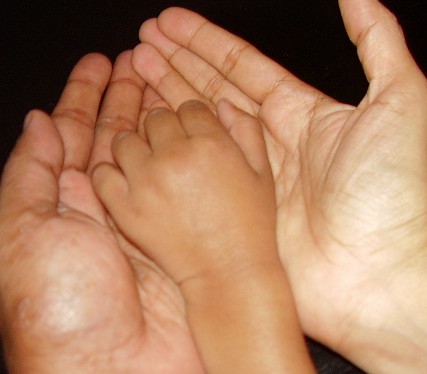
Can a trusted person be damaged by a close or trusting emotional relationship? Sounds illogical but it is possible. Deeper emotional dependence is often considered unhealthy but is an inborn tendency of humans. It is not necessarily a childhood characteristics that we need to outgrow.
Secure dependency is a sign of a healthy relationship, which helps one to be confident and independent in functioning. The more secure we are, the more independent we can be, rather, interdependent and self sufficient we can be. The availability of a emotionally close person provides comfort and security and their lack of access or unavailability can be distressing or hurting. Closeness with an emotionally unaffected person can reduce anxiety and help healthy unfolding of one’s personality. It gives confidence to take risks, learn new information, deal with problems and manage stress effectively in life.
Accessibility and emotional responsiveness are core of healthy bonding between individuals that help build trusting relationships. Our strongest of emotions arise in attachment/emotional relationships.
Insecure emotional relationships can be extremely distressing with anger and aggression experienced on loved ones. Requests for attention and reassurance from emotionally close friends or persons and their failure to respond can lead to anger outbursts, depression leading to detachment over a period of time. Depression maybe a natural response to lost emotional connections. This kind of response or reaction patterns can happen with any relation such as a parent and a child, siblings, wife and husband etc.
Maternal deprivation where an attachment figure is unavailable by rejection or abandonment or loss can be traumatic in the sense of ones ability to deal with fear and stress in one’s life. Unavailable emotional relationships can create insecure attachment with oneself and one’s world leading to inability to handle stress and their ability to emotionally relate to their loved ones.
On the other hand, a close or emotionally attached person can become manipulative or use ones closeness for their selfish needs of material or emotional gains which in the long run can be more damaging to the affected person than helping him or her to deal with the stress. An over-involved parental figure in child activities such as not letting child explore one’s world for fear of hurt or rejection can be damaging to the child in the short and long term as an adult.
In conditions like schizophrenia, it is a well established fact that over involvement, being very critical of ones behavior by an attachment figure or parental figure can be continuous stressors for the symptoms to reappear over a period of ones life time. Rather, these critical behaviors and over involvement can maintain ones psychological disturbance. Non availability of emotionally close relationship can lead to depression which can be limited to oneself or even run in families projecting relational patterns in a family relationship with repeated cycles over generations.
The extreme form of malfunctioning can happen with unhealthy personalities, where ones close and emotionally related persons, manipulate emotions to the core leaving the attached person hurt and blunt by the distancing over a period of time. Here, such persons can use emotions and emotionally close persons as instruments of meeting their needs, using them as objects than emotional beings, even without their knowledge. In other words, the quality of manipulating one’s loved ones can itself become their natural personality tendency leading to more and more loss of loved ones over a period of their life time and possibly leading to isolation, denial and ultimately lost relationships.
Emotions and emotional relationships are complex and one needs to invest time and energy to analyze and retrospect in order to live and healthy and secure relationships. If one does not make the effort to invest time and energy into the relationship, one can be left depressed, isolated, and even ill.
Human emotions, both positive such as happiness, excitement, and negative such as anger, sadness can play a very significant role in relationships. At the same time, the intensity of these emotions can equally be important in deciding the healthy and unhealthy properties of the relationships.By intensity, we mean, the strength or depth of the emotional reaction one expresses towards a personal, emotional or close relationship.
Emotions, specifically anger, have the capacity to stir the persons whole being or personality at the moment of its expression. Rapid physiologic, including hormonal changes, may take place with a high adrenaline rush that increases the function of major body systems such as rapid increase in heart beat, and restless movements of the body. If the environment or persons at the receiving end are not able to understand the intentions or reasons behind this high intense expression, a disequllibrium creating misconceptions may result. For example, if a family member is extremely aggressive (exhibiting high intensity of anger or emotion) and the person or persons at the receiving end miss the actual intention of why he or she is aggressive, an actual damage to the relationship may result as a consequence. The person at the receiving end may misconstrue that the “aggressive” person is trying to physically harm them while the “aggressive” person may be trying to express his anger or frustration through their behavior. Unless both sides understand each other, a strain the emotional relationship results.
When one is in a highly emotional intense state, one loses awareness of oneself, the surroundings and the persons in the environment. Continuous state of body and mind in such a high emotionally intense state can damage the health- both physical and psychological. More over it can be very stressful to close family members leading to a strain emotional distance over a period of time.
It is very important that one understand and works towards maintaining an emotional balance to preserve harmony with relationships. When one is emotionally intense state of body and mind, one loses the ability to reason and logical capacity and may cross safe boundaries of propriety, and possibly abuse close family members. Repeated episodes of such situations can permanently damage the emotional relationship making people feel alone, depressed and vulnerable. Not only that, repeated expressions of negative emotions can themself become habitual leading to more and more such “disasters”. The unpredictability can be very threatening to significant or close family members living under the same roof.
In order to preserve one’s relationships, it is important to be aware of the situation as a first step. Showing agression in a high emotional state can appear to be an immediate rewarding experience for the person expressing; however, it can be more damaging in the long run. The receiving person may obey or become submissive for the moment but can become increasingly resistant over time and create an increasingly negative relationship. The ability to share openly between members becomes constrained. It is important that family members become aware and are willing to work towards this.
Certain precautions can be done to avoid such events-preventing emotional outbursts, anticipating and moving away from stressors, discussing stressors with family members, and discussions post episode with all sides willing to listen to each other, working out a balance, by finding alternate creative expressions or expectations, or writing a diary or notes to understand and reflect, learning to express frustration or upset by discussing than showing anger. If relations are still developing a distance in spite of best personal efforts, it is always advisable to seek professional help and even undergo an anger management program. It is advisable not to take any “emotionally charged” major decisions when one in a high emotional state of aggression.
When more than one member of a family are seen together in a therapy setting, it is called Family Therapy. The meeting of a couple, a parent and a child, siblings, or a multi-generation family with a family therapist all fall within the scope of family therapy.
When is family therapy indicated? Family therapy is indicated when the focus of therapy or counselling is related to changing or addressing unhealthy interactions between family members, aimed at improving the family functioning as a unit or improve functioning of individual members of the family.
Family therapy can be applied or approached for variety of conditions. Therapy can be used for or aimed at resolving difficulties between couple such as marital dissatisfaction, sexual or intimacy difficulties, therapy aimed at overcoming differences parents and their grown up children, or to address problems in the behavior of a family member and the consequent effects on other family members.
How does family therapy help? Family therapist focuses on the functioning of the family as a unit by careful and objective observations made while family members interact with each other in a therapy setting. In a family relationship, the relation is considered as a product of interactions happening between members as a process. For example, if a person addicted to alcohol reasons that his or her consumption is due to stress created within the family, the family members may reason that the stressful environment is created by the person’s alcoholism. The reasoning in this instance runs in circles with it being difficult to establish which came first- the stress or the alcoholism. Similarly, if a parent sees his child has a troublesome behavior, the child may reason that the parent never took time to understand their views. In a family therapy setting, the process of circular reasoning is carefully interpreted and the family given feedback to work out towards a more workable solution. The functioning of a family together will be the focus of counselling in a family therapy setting rather than focusing on changing an individual person. That means, all members are expected to change to have a possible resolution rather than holding onto or focusing on one member alone as a reason for difficulty.
Family therapy strengthens emotional bonding between members of a family by making them aware of the unhealthy behaviors of individual members , the aim of the therapy and the need for collaboration between all members towards achieving a desirable harmony that will improve overall functioning of the family as a unit. It gives a clarity to all members of the family involved in therapy as to how each member is contributing to the dysfunctional state.
There are different treatment or therapy models utilized by family therapist based on the nature of the problem, availability of family members and complexity of the family dysfunctioning. The cooperation of the members is a vital component for the success of the family therapy.
Discord is a word that explains adjustment difficulties between related persons at a severe or intense level. Parental discord can be a major and crucial area that can have significant effect on emotional relation between siblings. Constant fights and added physical or emotional or verbal abuse between parents can create confusion and anxiety at a younger age (even for month old babies) sowing seeds of tension, fear and pent up anger. Children may not be able to meaningfully verbalize and express these conflicting thoughts and emotions. At later ages, as they grow into adult individuals, it may be expressed as being fearful of or a fear of being emotionally attached to another person, a fear of authority, considering relationships as risky or as being vulnerable, fear of becoming a victim, fear of rejection etc.
Effects on the older sibling: The responsibility of older sibling taking a parental role where possible over involvement (without even possibly being aware of it) can result in loss of his or her own position as a sibling. This can kindle or trigger raised expectations and added responsibilities from younger siblings at a later stage. The younger siblings may transfer parental roles and expectations to the older sibling including the baggage and frustrations associated with the parental roles. This can lead to an increased stress in the relationship as the older sibling has to manage their own needs and expectations with those of the younger siblings. The expectations from the younger siblings may interfere with the expectations of the older siblings on how they would like to build their life. As the older sibling tries to achieve a balance, they may be looked at as being dominating, intrusive or interfering or even as uncaring and selfish. However, from the older siblings point of view, it can be a result of overbearing parental responsibilities that add stress and lead to hurt and emotional strain. Losing one’s own status as a brother or sister (and one’s own childhood and dreams) can sometimes be a shock that leads to emotional stress.
Effect on the younger sibling: Inability to differentiate the role played by a sibling and their parents can lead to over-expectations that are impractical and strain the emotional relationship between siblings. Emotional battles and manipulations between them can lead to a disengaged or “lack of love” relation and create a distance between siblings.
Effect on parents: Lack of focus can trigger or rekindle past stressors among parents leading to the resurfacing of old conflicts. It may result in intense struggles between the parents and may even involve their married children and spouses.
How do you work through this entangled web of emotional relations? The only way to work towards getting balance can be a direct discussion between parents and siblings. This depends on the motivation and availability of all members to work together and retain the sense of a family. Unless an effort is made, the marital and interpersonal relations of parents and their children can be affected. As the children become more involved with their life – their careers, their own children, their marital relations- the level of motivation needed to work towards maintaining the family increases. There is the risk that the family loses its identity and each individual charts their won separate courses without any common attachment. The same cycle may repeat with the individual families as it is not biological tendencies alone, but relational patterns also are repetitive with personalities remaining nearly the same. Like genetic characteristics, we also carry the relational patterns with our personalities and tend to repeat them. Unless corrected consciously, this may affect every relation entered into.
If the level of motivation and distance is low or absent, the best way can be creating a healthy distance between own families so that further strain is not built up (either as a temporary or permanent solution). The boundaries of what is healthy and unhealthy is more blurred than clear and hence needs a clear perception on all sides. The loss of the family structure may be seen as a real loss of an anchor or may bee pragmatically accepted as the dispersion of the family with the loss of its own identity.
There are limited options to work with if individual family members are not willing to reflect and re-visit their own roles and expectations with a better understanding. The longer the duration and distance in terms of accepting the need to work on relations, the lesser the chances of coming together as a family again. The binding forces that are intense and strongly bind family relations can be as strongly repulsive if family members do not work towards a healthy relation. You may not be able to choose the family you were born into but you could definitely choose to work towards maintaining the relational structure of the family you were born into.
We gather our best resources and are motivated to achieve our short term and long term goals in life including acquiring a valuable academic degree or a decent employment or materialistic benefits.
But, how many of us reflect on the “suffering” we go through in the pursuit of our goals? How many of us reflect on this “suffering” in the relationships with close family members or intimate relationships as playing a constructive and positive role in our growth?
When we are afraid of a particular situation, say writing a competitive exam, the whole world seems to gather its energy to support us and help us keep our courage to go through and cope with the difficult phases. But within the closed doors of our own family, when one is suffering at an emotional level, how many of us know about or care about or offer support to those in need?
It is possible that our own family members, with whom we are expected to connect emotionally, are sometimes blind to or negate our suffering or hurt. In what conditions or situations can it happen? What is the best way out?
Competing or conflicting interests between family members can lead to a lack of understanding of the emotional needs of others. The unmet needs of the family members can lead to a period of frustration, anger, sadness, hopelessness, despair and a whole range of emotions. This may become a positive force by bringing together the entire family to work together for solutions that help everyone achieve their goals. It can become a destructive force where those who “succeed” or those who “fail” become insensitive, blunt, non responsive or indifferent to the needs of others. It is a debatable point if the relations can return to normal once everyone meets their needs once the relationship has entered a destructive phase. It depends on the pre-existing emotional bonding, the bonds that existed before the relations got strained by different needs. If there is a healthy space between members and clarity on each members roles in the family, it is still possible that the relation can return to normal or at least become more in harmony. If the foundation of emotional bonding is already weak with conflicting roles and confusing expectations from each other, even after a balanced state, the desired emotionally healthy relationship may not be achieved.
The way out is definitely to take time out to reflect, analyze and develop clarity over the strained relationships. Be open to a honest, direct discussion. However, the motivation of other family members to work on the relation is a major influencing factor. Untangling the complexities of relationships can be difficult and lead to more problems and more brooding. It might be better to seek the help of an experienced family therapist who can play a neutral role and help untangle and navigate through the complex relationships and expectations. However, the results are only as good as the motivation of the family members to work on the relationship!
Language (verbal or non verbal body language) is a special gift of humankind that can help to generate goodwill, for self growth or to relate better to other people including our near and dear ones. However, language alone cannot help when it comes to relating meaningfully with another human being.
In psychological terms, language is only a means of communication. Without feeling, it loses its capacity to build a sensible relation between two individuals. Let us try and focus on close relations in our own family system. If your intention or emotion is one of love or affection for the sake of it, that is unconditionally, relating is more pleasant or open minded and empathetic. If the intention or emotion is hatred, the language can only be bitter and harsh and sharp like a knife! If the underlying emotion is anger, the language can be more impulsive, intolerable and for the moment and probably damaging physically and psychologically. If the emotion is jealousy, the language can be degrading, critical and belittling.
It means that emotions drive the content and tone of the language and expressed words in relating to each other.
Family members have to be aware and work through these basic emotions to relate to each other. Otherwise, the relationship may not become meaningful and end up being a relation based on only a biological basis but without heart and soul.
Is there a need for family members to relate when the basic premise is that family members are already related by nature?
It is essential to constantly recognize how we related to each other as family members as the intensity and variation of the basic emotional flow can drive the relationship closer or apart. If the members relate to each other unconditionally (without an underlying agenda of major expectations from each other), the emotion of love is at a peak. In an over strained/over involved relation with major expectations, the emotion of hatred may rear its head. Anger or impulsive behavior goes on keeping the relation between family members fluctuating at its extremes of either disturbed or extra sensitive and hardly at balance or predictable. Jealousy comes into the picture when differences in the wave lengths of thinking influence the attitudes of family members.
Somewhere in the stream of various emotions, the bonding in a family depends on which emotions form the basis of or play a major role in the relation. One of the emotions may become the primary drive for the relation with the other emotions then playing a subsidiary or supplementary role.
Families are never static, they are always in a dynamic state and flux and hence relationships in a family also never remain static. The balance is maintained by the fundamental emotion that drives the context of the relationship at that point of time. For example, at the time of arrival of a new addition to the family (like a new born baby), if the underlying emotion is love, the new born receives an immediate warm welcome and acceptance. If emotion is one of hatred, there maybe a disengagement from the newborn, if the emotion is jealousy, overdoing/under doing comes in and anger leads to destruction/deprivation.
This does not mean that any relation is ruled by emotions alone. Communication is a mediator of our emotions, it is also a mediator of thoughtful processes from a thoughtful human. But when emotions are at their high intensity, thinking or logical reasoning may take a back seat. Too much logical practical thinking without emotion is equally disastrous. There is a need for balance between the emotive and thoughtful state for us to relate sensibly to our own family members.
But in cases of depression or higher anxiety (they also come under emotional states of mind although maybe in a negative way), the equation of relating to a family member can change dramatically to a pathological extent. Viewing all experiences from a negative viewpoint (as in depression) and unable to be at peace or in a calm state (when in state of anxiety) can distort the equation of the relationship to the core and create extreme stress and friction in relating to each other.
It is essential that we keep the balance of emotions and thoughtful states at its best. As a social being, relating to our family members or to the larger world around us needs constant self analysis, accepting and correcting our mistakes, and a readiness to move on with new learning, a willingness to change for the better, taking responsibility for ones actions and their consequences. Life is not forever, and living life meaningfully will hopefully be better than living life without direction. Relating sensibly and happily to each other is fun, complex and possible only with effort….we may be born relatives but may not die relating if we do not put in the efforts to make relations work!
A HALF DAY WORKSHOP
on
Marriage is considered a unique life experience that should lead to happy and enjoyable memories. Marriage is often a union of two different personalities that seek to merge into a single common purpose and goal in life. Each partner has their own expectations and dreams and a happy marriage is one where both partners are able to realize their own as well as the potential of their partner. Expectations that are unrealistic and are not in alignment with the wishes of the partner or a common goal can lead to friction in the relationship. Often, friends turn strangers and even enemies over a period of sustained dissatisfaction. Understanding our partner in depth helps to make relationships more meaningful for a productive marriage.
This half day workshop focuses on developing an understanding of varied expectations from marriage and the complexities associated with differing expectations. Through an interactive discussion mode, Dr. Kavitha Praveen, an experienced marital therapist, will discuss the different phases of a marriage and possible problem solving options that are rooted in an understanding of the self and the partner. The workshop will be useful for anyone interested in the institution of marriage- whether they are already married, separated or planning to marry.
Participation is limited to 15 members on a first come first served basis.
Date: September 9, 2012
Venue: Manasvin’s Center for Family Psychotherapy, Anand Nagar Colony, Khairatabad, Hyderabad, India
Please contact Dr Kavitha Praveen at 9849924478 (between 9am and 9pm ) to register.
With increased complexity of our life styles and increased orientation towards careers, we hardly take quality time for raising a child. Rather, we focus more on having them run with us from morning till bed time. As parents, we have our busy careers or schedules where as our kids are competing equally with us with 7 am to 7 pm school hours and after school activities. On the weekends, we are tired and drained from the week, while our kids are either busy with coachings or extracurricular activities. Then the only time spent together (leave alone teaching/disciplining a child) would be in front of TV or watching movie or eating out in a restaurant. This is the story of almost all nuclear families these days.
When these kind of routines are considered as normal to our family environments, what about families where there is a special child or a child with special needs to care for? What if there is a child or another family member with a medical illness to care for? The flooding of the market with newer gadgets and our need to replace our emotional support with materialistic needs, expensive school admissions, expensive vacations are additional aspects that look exciting but need to be carefully considered for their benefits or potential harm. The grass on the other side is not always greener. Children spend a lot of time playing with their gadgets (play stations, computer games etc) and often at the cost of their sleep and food. Eating healthy food at appropriate times takes a backseat with “snacking” the preferred food. Comparisons with the peer group abound on who has the most material things, low tolerance and high frustration levels, a reducing respect for human and emotional relationships, and an attitude of “It is alright, what is the big deal?” are more common these days.
As adults, are we able to identify the early signs of diversion from the education they are supposed to receive? Are we able to take time to work on these possible issues before they become more problematic? Are we able to be firm or discipline or direct the child towards an acceptable path? Or do we end up crying over spilt milk while consistently refusing to see the signs of impending trouble? Do we assuage our feelings of guilt or convenience by giving more materialistic stuff at our children that sort of drives them farther and farther away?
Anything that is recognized early can be worked at systematically. What should we focus on?
This is an incomplete list but brings about the need to first look at ourselves as a parent before we try to chaange our children. The challenge can be pleasant and something that can be worked together with the child(ren) building long lasting bonds. We, as parents, have to be open to growing and learning with our children.
Majority of couples with problems in physical intimacy initially consult a gynecologist or sex specialist rather than a mental health specialist. This is because physical intimacy or sexual intercourse is considered a physical act by many rather than a combination of physical and psychological effects. For some, sex is considered necessary only to produce children and is a responsibility or duty towards the same without psychological considerations. Many consider the problem to be that of a woman and hence initially consult the gynecologist.
When the gynecologist examines the woman, it is possible that they may find medical reasons that can explain the discomfort or lack of physical intimacy. These can be reasons related to the reproductive system or other medical disorders or conditions. Some of these might require medication, some might require surgical interventions. However, it is also possible that the problems with physical intimacy exist even in the absence of any obvious physical problems. These may related to non-physical problems like phobias related to pain or a fear of pain, misconceptions regarding masturbation and the sexual experience, low self esteem, feelings of inadequacy or inferiority, cultural stigma and taboos related to sexual intimacy and possibly childhood sexual abuse/assault/molestation. The discomfort with physical intimacy can also occur if the partner is considered physically or emotionally unattractive or if the environment is not amenable to relax. Needless to say, stress related to finances, work or other areas is an important factor to consider. Irrespective of the primary cause, it is important to work with the mind as much as with the body to improve comfort levels in persons/couples who face problems in physical intimacy.
Psychosexual counseling starts with the assessment of possible factors that may contribute (currently active factors or factors maintained from the past) to the problem. This stress includes a detailed interview of couple (separate interviews initially) exploring possible factors, both common and rare. Once an understanding of the issues that face the couple and the possible reasons for it are obtained, the next step is to initiate the process of addressing and overcoming these issues.
The initial step is to clarify thoughts regarding various aspects of intimacy such as the need for emotional bonding with partner, open communication of likes and dislikes regarding each others preferences related to intimacy including sensitization that it is acceptable for the female to have preferences and sorting out issues/stressors related to other significant family members or family or work environment that contributes to stress.
The fear of pain and the feeling of intrusion may be a factor for discomfort in female partners. In such instances, there is a need to initiate to relaxation exercises through a schedule for a week or 10 days. The relaxation exercises will cover the whole body from the head to toe and training to relax will be provided using Jacobson’s Progressive Muscular Relaxation. The logic of these sessions is that a relaxed body will lead to a relaxed mind and the process of relaxing the body relaxes the mind. The relxaed body and muscles will reduce friction and tension and help to reduce or overcome pain.
Masturbation has often been considered as a cause for problems especially in males. Masturbation is worngly considered as contributing to erectile dysfunction or premature ejaculation. Specific techniques and training on the mind will be taught to overcome these causes in the males (in the absence of any physical cause) to overcome these dysfunctions.
Cultural and stigma related causes remain a major cause for discomfort with physical intimacy. Appropriate sex and health education is given to the partners with specific focus on identified issues. When childhood abuse orr incest is a contributing factor, emotional or thought related (cognitive therapy) is recommended to settle deep seated trauma that can very actively interfere in couple relations- both emotional and intimacy related.
Where factors related to stress with significant family members such as over involvement or lack of privacy for the couple are involved, the couple has to be helped to find out practical solutions to create healthy boundaries between the couple and the other family members, or the space for the couple and other family members. The couple has to be helped to reduce the impact of other stressors on the quality of the time they spend together. The couple has to be educated that physical intimacy or sex is an aspect that is more influenced by the couple’s emotional relationship rather than feelings of equality or control or determination of who contributes more to the relationship.
In summary, problems with sexual intimacy can be physical, psychological or a combination of both. Psychological issues can be worked on and resolved as much as possible if the mind is open and willing to acknowledge the presence and depth of the problem. Willingness to work towards resolution also necessitates a willingness to change one’s view and improving acceptance of the partner.
 Manasvin's Center for Marital and Family Therapy