Clinical Psychology
Art Therapy Workshop Conducted Today! 14th April, 2018



SENSORY OVERLOADING AND IT’S EFFECTS ON OUR FUNCTIONING
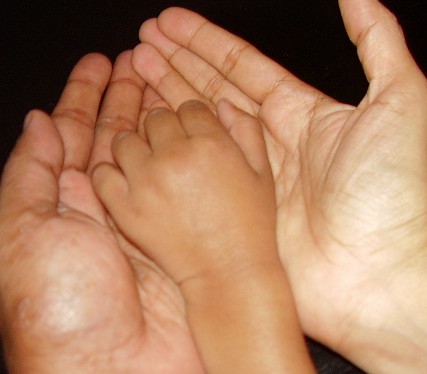
With the fast growing technology all around the world, what we knew today is already outdated by tomorrow. Does this ultra fast pace help us grow or pull us down or challenge us with new issues to tackle?If stability and consistency help us move with better integration,too much use of technology can definitely have ill effects on our psychological health and healthy human relations.With so called fast moving life/routine we all are supposedly busy with, how much meaningful interactions are really happening?
Sensory overload is our new terminology that can undoubtedly have effects on our not so meaningful human interactions at work place or with in our own family members. How many of us really listen to,see what is happening in front of us with undivided attention and sense right meaning of what we hear ! With thousand-and-one things running in the background of our minds we end up half listening/seeing and so impatient that we want just the conclusions or solutions! Is it not our common experience? But still we move on with our routines reassuring to ourselves how we managed a meaningful and productive day.Sensory overloading can have drastic effects on the young growing minds of our children with no meaningful learning happening in spite of all the necessary gadgets that as parents proudly feel, we provided for our children irrespective of their receptive status. It has nothing to do with lacking intelligence or unable to remember information.Sensory overloading is inability to filter meaningful information from the meaningless.We all take our brains for granted that it can handle, process endless information! When we cannot have peaceful sleep that lost it ‘s refreshed feel, when we can’t have a healthy meal at regular intervals, our body indicates by easy fatigue and low concentration levels. So does our brain and it’s functioning.
Sensory processing disorder/sensory processing dysfunction is the condition clinically diagnosed in children. Child is happy to go to school but unable to make friends,always jumpy/nosy coming in the way of others,quick to grasp new concepts able to recollect one time but cannot at other times,sensitive to touch/noise, clumsy in eating/ dressing, easily tearful,moody, likes open places/outdoors and extremely restless indoors/restricted mobility, always fidgeting/restless can be confusing for parents and teachers as well. Is this child autistic or hyperactive? neither. These are symptoms of sensory perceptual dysfunction.No issues with intelligence, no sensory deficits but needing right doses of sensory stimulation.Is it treatable?definitely and very effectively not by medicines but by individually tailored occupational therapy.
Occupational therapy is the treatment module specially tailored to meet the individual child’s need for right sensory stimulation. It is usually very interesting fun filled activities to meet the right dose of sensory needs of your child.This includes wide range of activities of swinging,sand play,art & hand work such as free painting, knitting and most importantly unhurried and relaxed environment where children can be spontaneous and at their best. Can they become like any other child? go to school? A definite “YES” as long as you provide the right sensory stimulation at home until your child adapts to (based on each child’s need for right sensory stimulation).
Who can help? it’s a team work of developmental pediatrician,curative educator,physiotherapist and occupational therapist and of course an open minded parenting and not the least a sensitive teacher.
Then what is the way out for an adult overloading? An adult can easily recognise the symptoms of overload and work accordingly. Mould your environment with right mix of fun and work. It’s alright if every minute of your day is not focused towards spending only on productive activities but it’s not alright if you lose a precious relation or fail to listen to your child in need. Explore what can relax your mind and body -art/music/yoga/fitness in body and mind/travel/nature/good food/explore your own interests if you never explored so far.That will provide you the right solution.
Highly Career Oriented Parents are a boon or bane to their children?
Career oriented parents maybe considered as good role models for their children but sometimes can be disastrous if children have their own dreams to fulfill or limitations in their abilities. Often, children are brought to clinical attention for psychological evaluation with stress related to perceived expectations even though not obviously spoken by or demanded by their parents. Unspoken influences by parents seem to bother children especially in the teenage group. Often, parents talk to their friends about their children (in the presence of the child) as to how he/she stood first in a game/academic performance, indirectly suggesting the child that he/she will be appreciated when in limelight. The growing teenager with an unfolding temperament of wnating to be accepted and appreciated may be sensitive to such statements. Often, conversations between adults focus on “how many children do you have, what do they do, which school they are in” without any malicious intent but possibly leading to unforeseen consequences. Parents may also consider their children spending time with their friends without engaging in any meaningful “academic” or “competitive activity” as a waste of time or being aimless.
Can parents recognize this change in their child (a drop in motivation) with their own stress, the limited time spent with children, lack of common routine with time shared together? Sometime of a day or at least a day in a week should be set aside for everyone to share their day. This could be structured or unstructured with the focus on sharing both the perceived gains or good stuff as well as the perceived pains or bad stuff. These sessions may also help to understand specific needs of children. The focus of such sessions is to share and listen and not to sermonize or be judgmental thus encouraging children to feel free to open up about their experiences.
There is a need for parents to recognize that career is important but it alone does not make their child a well groomed or well adjusted personality in future. Spending quality time together even if it is just talking is a great stress buster for children, quality time will imply that one parents do not multitask during this time period.
Often, parents want children to follow their own career paths so that a separate foundation for career need not be laid, children can just piggy back onto their parents career. Although the intention is often to have their children settle faster and not have to go through the same growing pains, this may sometimes be at the cost of the child’s own dreams and their abilities or limitations.
Success is often a perceptional point of view that will vary with each individual. People can be successful in one aspect of life and be considered as failures in another aspect of life. Showing sensitivity towards your child’s dreams and aspirations may help them reach their full potential and make them a happy person.
Bringing out the hidden potential of your child
BRINGING OUT THE HIDDEN POTENTIAL OF YOUR CHILD
A SIX MONTH TRAINING PROGRAM ON WEEKENDS
With increased complexity of lifestyle and decreasing tolerance levels in our society, our children are the most affected group. Lack of life skills is one important area of concern for growing children. An over emphasis on academics and career is developing our children into incomplete personalities unable to face disappointments. The ability to see failures as stepping stones to their success and all round development is being lost.
Keeping this in mind, we have developed a holistic program on Sundays for children aged 8 to 12 years of age. The program aims to bring out the hidden potential of your child and focused on improving communication skills, assertiveness as well as improving control over anger and impulsive behaviour.
Children will be assessed initially to understand their strengths and areas that can be improved further. This assessment will be conducted by a clinical psychologist and will include collecting information on basic temperament of the child, academic performance, home and school environment and adjustment levels.
Selected children will be trained in practical skills using role plays, dramas, and situational awareness and improving group compliance, verbal expressions, impulse control behaviours, peer interactions and classroom presentations.
The training sessions will be of two hours duration (10.30 am to 12.30 pm) every Sunday and over a period of 6 months starting from January 2014. Each batch will have a maximum of 20 children. Enrolment will be on a first come first served basis. Interested parents should attend the screening session with their child by fixing an appointment.
Venue: Manasvin’s Center for Family Psychotherapy, Anand Nagar Colony, Khairatabad, Hyderabad 500004. http://psychotherapyhyd.com
Interested parents can call Dr Kavitha Praveen at 9849924478 between 9 am and 9 pm to fix an appointment or for further clarifications.
Can a close/trusting emotional relationship damage the trusted person?
Can a trusted person be damaged by a close or trusting emotional relationship? Sounds illogical but it is possible. Deeper emotional dependence is often considered unhealthy but is an inborn tendency of humans. It is not necessarily a childhood characteristics that we need to outgrow.
Secure dependency is a sign of a healthy relationship, which helps one to be confident and independent in functioning. The more secure we are, the more independent we can be, rather, interdependent and self sufficient we can be. The availability of a emotionally close person provides comfort and security and their lack of access or unavailability can be distressing or hurting. Closeness with an emotionally unaffected person can reduce anxiety and help healthy unfolding of one’s personality. It gives confidence to take risks, learn new information, deal with problems and manage stress effectively in life.
Accessibility and emotional responsiveness are core of healthy bonding between individuals that help build trusting relationships. Our strongest of emotions arise in attachment/emotional relationships.
Insecure emotional relationships can be extremely distressing with anger and aggression experienced on loved ones. Requests for attention and reassurance from emotionally close friends or persons and their failure to respond can lead to anger outbursts, depression leading to detachment over a period of time. Depression maybe a natural response to lost emotional connections. This kind of response or reaction patterns can happen with any relation such as a parent and a child, siblings, wife and husband etc.
Maternal deprivation where an attachment figure is unavailable by rejection or abandonment or loss can be traumatic in the sense of ones ability to deal with fear and stress in one’s life. Unavailable emotional relationships can create insecure attachment with oneself and one’s world leading to inability to handle stress and their ability to emotionally relate to their loved ones.
On the other hand, a close or emotionally attached person can become manipulative or use ones closeness for their selfish needs of material or emotional gains which in the long run can be more damaging to the affected person than helping him or her to deal with the stress. An over-involved parental figure in child activities such as not letting child explore one’s world for fear of hurt or rejection can be damaging to the child in the short and long term as an adult.
In conditions like schizophrenia, it is a well established fact that over involvement, being very critical of ones behavior by an attachment figure or parental figure can be continuous stressors for the symptoms to reappear over a period of ones life time. Rather, these critical behaviors and over involvement can maintain ones psychological disturbance. Non availability of emotionally close relationship can lead to depression which can be limited to oneself or even run in families projecting relational patterns in a family relationship with repeated cycles over generations.
The extreme form of malfunctioning can happen with unhealthy personalities, where ones close and emotionally related persons, manipulate emotions to the core leaving the attached person hurt and blunt by the distancing over a period of time. Here, such persons can use emotions and emotionally close persons as instruments of meeting their needs, using them as objects than emotional beings, even without their knowledge. In other words, the quality of manipulating one’s loved ones can itself become their natural personality tendency leading to more and more loss of loved ones over a period of their life time and possibly leading to isolation, denial and ultimately lost relationships.
Emotions and emotional relationships are complex and one needs to invest time and energy to analyze and retrospect in order to live and healthy and secure relationships. If one does not make the effort to invest time and energy into the relationship, one can be left depressed, isolated, and even ill.
Aggression- Its effects on family relationships
Human emotions, both positive such as happiness, excitement, and negative such as anger, sadness can play a very significant role in relationships. At the same time, the intensity of these emotions can equally be important in deciding the healthy and unhealthy properties of the relationships.By intensity, we mean, the strength or depth of the emotional reaction one expresses towards a personal, emotional or close relationship.
Emotions, specifically anger, have the capacity to stir the persons whole being or personality at the moment of its expression. Rapid physiologic, including hormonal changes, may take place with a high adrenaline rush that increases the function of major body systems such as rapid increase in heart beat, and restless movements of the body. If the environment or persons at the receiving end are not able to understand the intentions or reasons behind this high intense expression, a disequllibrium creating misconceptions may result. For example, if a family member is extremely aggressive (exhibiting high intensity of anger or emotion) and the person or persons at the receiving end miss the actual intention of why he or she is aggressive, an actual damage to the relationship may result as a consequence. The person at the receiving end may misconstrue that the “aggressive” person is trying to physically harm them while the “aggressive” person may be trying to express his anger or frustration through their behavior. Unless both sides understand each other, a strain the emotional relationship results.
When one is in a highly emotional intense state, one loses awareness of oneself, the surroundings and the persons in the environment. Continuous state of body and mind in such a high emotionally intense state can damage the health- both physical and psychological. More over it can be very stressful to close family members leading to a strain emotional distance over a period of time.
It is very important that one understand and works towards maintaining an emotional balance to preserve harmony with relationships. When one is emotionally intense state of body and mind, one loses the ability to reason and logical capacity and may cross safe boundaries of propriety, and possibly abuse close family members. Repeated episodes of such situations can permanently damage the emotional relationship making people feel alone, depressed and vulnerable. Not only that, repeated expressions of negative emotions can themself become habitual leading to more and more such “disasters”. The unpredictability can be very threatening to significant or close family members living under the same roof.
In order to preserve one’s relationships, it is important to be aware of the situation as a first step. Showing agression in a high emotional state can appear to be an immediate rewarding experience for the person expressing; however, it can be more damaging in the long run. The receiving person may obey or become submissive for the moment but can become increasingly resistant over time and create an increasingly negative relationship. The ability to share openly between members becomes constrained. It is important that family members become aware and are willing to work towards this.
Certain precautions can be done to avoid such events-preventing emotional outbursts, anticipating and moving away from stressors, discussing stressors with family members, and discussions post episode with all sides willing to listen to each other, working out a balance, by finding alternate creative expressions or expectations, or writing a diary or notes to understand and reflect, learning to express frustration or upset by discussing than showing anger. If relations are still developing a distance in spite of best personal efforts, it is always advisable to seek professional help and even undergo an anger management program. It is advisable not to take any “emotionally charged” major decisions when one in a high emotional state of aggression.
What is Family Therapy?
When more than one member of a family are seen together in a therapy setting, it is called Family Therapy. The meeting of a couple, a parent and a child, siblings, or a multi-generation family with a family therapist all fall within the scope of family therapy.
When is family therapy indicated? Family therapy is indicated when the focus of therapy or counselling is related to changing or addressing unhealthy interactions between family members, aimed at improving the family functioning as a unit or improve functioning of individual members of the family.
Family therapy can be applied or approached for variety of conditions. Therapy can be used for or aimed at resolving difficulties between couple such as marital dissatisfaction, sexual or intimacy difficulties, therapy aimed at overcoming differences parents and their grown up children, or to address problems in the behavior of a family member and the consequent effects on other family members.
How does family therapy help? Family therapist focuses on the functioning of the family as a unit by careful and objective observations made while family members interact with each other in a therapy setting. In a family relationship, the relation is considered as a product of interactions happening between members as a process. For example, if a person addicted to alcohol reasons that his or her consumption is due to stress created within the family, the family members may reason that the stressful environment is created by the person’s alcoholism. The reasoning in this instance runs in circles with it being difficult to establish which came first- the stress or the alcoholism. Similarly, if a parent sees his child has a troublesome behavior, the child may reason that the parent never took time to understand their views. In a family therapy setting, the process of circular reasoning is carefully interpreted and the family given feedback to work out towards a more workable solution. The functioning of a family together will be the focus of counselling in a family therapy setting rather than focusing on changing an individual person. That means, all members are expected to change to have a possible resolution rather than holding onto or focusing on one member alone as a reason for difficulty.
Family therapy strengthens emotional bonding between members of a family by making them aware of the unhealthy behaviors of individual members , the aim of the therapy and the need for collaboration between all members towards achieving a desirable harmony that will improve overall functioning of the family as a unit. It gives a clarity to all members of the family involved in therapy as to how each member is contributing to the dysfunctional state.
There are different treatment or therapy models utilized by family therapist based on the nature of the problem, availability of family members and complexity of the family dysfunctioning. The cooperation of the members is a vital component for the success of the family therapy.
“Suffering”-Constructive or Destructive in an emotional relation?
We gather our best resources and are motivated to achieve our short term and long term goals in life including acquiring a valuable academic degree or a decent employment or materialistic benefits.
But, how many of us reflect on the “suffering” we go through in the pursuit of our goals? How many of us reflect on this “suffering” in the relationships with close family members or intimate relationships as playing a constructive and positive role in our growth?
When we are afraid of a particular situation, say writing a competitive exam, the whole world seems to gather its energy to support us and help us keep our courage to go through and cope with the difficult phases. But within the closed doors of our own family, when one is suffering at an emotional level, how many of us know about or care about or offer support to those in need?
It is possible that our own family members, with whom we are expected to connect emotionally, are sometimes blind to or negate our suffering or hurt. In what conditions or situations can it happen? What is the best way out?
Competing or conflicting interests between family members can lead to a lack of understanding of the emotional needs of others. The unmet needs of the family members can lead to a period of frustration, anger, sadness, hopelessness, despair and a whole range of emotions. This may become a positive force by bringing together the entire family to work together for solutions that help everyone achieve their goals. It can become a destructive force where those who “succeed” or those who “fail” become insensitive, blunt, non responsive or indifferent to the needs of others. It is a debatable point if the relations can return to normal once everyone meets their needs once the relationship has entered a destructive phase. It depends on the pre-existing emotional bonding, the bonds that existed before the relations got strained by different needs. If there is a healthy space between members and clarity on each members roles in the family, it is still possible that the relation can return to normal or at least become more in harmony. If the foundation of emotional bonding is already weak with conflicting roles and confusing expectations from each other, even after a balanced state, the desired emotionally healthy relationship may not be achieved.
The way out is definitely to take time out to reflect, analyze and develop clarity over the strained relationships. Be open to a honest, direct discussion. However, the motivation of other family members to work on the relation is a major influencing factor. Untangling the complexities of relationships can be difficult and lead to more problems and more brooding. It might be better to seek the help of an experienced family therapist who can play a neutral role and help untangle and navigate through the complex relationships and expectations. However, the results are only as good as the motivation of the family members to work on the relationship!
Language and Words in the context of a Meaningful Relationship
Language (verbal or non verbal body language) is a special gift of humankind that can help to generate goodwill, for self growth or to relate better to other people including our near and dear ones. However, language alone cannot help when it comes to relating meaningfully with another human being.
In psychological terms, language is only a means of communication. Without feeling, it loses its capacity to build a sensible relation between two individuals. Let us try and focus on close relations in our own family system. If your intention or emotion is one of love or affection for the sake of it, that is unconditionally, relating is more pleasant or open minded and empathetic. If the intention or emotion is hatred, the language can only be bitter and harsh and sharp like a knife! If the underlying emotion is anger, the language can be more impulsive, intolerable and for the moment and probably damaging physically and psychologically. If the emotion is jealousy, the language can be degrading, critical and belittling.
It means that emotions drive the content and tone of the language and expressed words in relating to each other.
Family members have to be aware and work through these basic emotions to relate to each other. Otherwise, the relationship may not become meaningful and end up being a relation based on only a biological basis but without heart and soul.
Is there a need for family members to relate when the basic premise is that family members are already related by nature?
It is essential to constantly recognize how we related to each other as family members as the intensity and variation of the basic emotional flow can drive the relationship closer or apart. If the members relate to each other unconditionally (without an underlying agenda of major expectations from each other), the emotion of love is at a peak. In an over strained/over involved relation with major expectations, the emotion of hatred may rear its head. Anger or impulsive behavior goes on keeping the relation between family members fluctuating at its extremes of either disturbed or extra sensitive and hardly at balance or predictable. Jealousy comes into the picture when differences in the wave lengths of thinking influence the attitudes of family members.
Somewhere in the stream of various emotions, the bonding in a family depends on which emotions form the basis of or play a major role in the relation. One of the emotions may become the primary drive for the relation with the other emotions then playing a subsidiary or supplementary role.
Families are never static, they are always in a dynamic state and flux and hence relationships in a family also never remain static. The balance is maintained by the fundamental emotion that drives the context of the relationship at that point of time. For example, at the time of arrival of a new addition to the family (like a new born baby), if the underlying emotion is love, the new born receives an immediate warm welcome and acceptance. If emotion is one of hatred, there maybe a disengagement from the newborn, if the emotion is jealousy, overdoing/under doing comes in and anger leads to destruction/deprivation.
This does not mean that any relation is ruled by emotions alone. Communication is a mediator of our emotions, it is also a mediator of thoughtful processes from a thoughtful human. But when emotions are at their high intensity, thinking or logical reasoning may take a back seat. Too much logical practical thinking without emotion is equally disastrous. There is a need for balance between the emotive and thoughtful state for us to relate sensibly to our own family members.
But in cases of depression or higher anxiety (they also come under emotional states of mind although maybe in a negative way), the equation of relating to a family member can change dramatically to a pathological extent. Viewing all experiences from a negative viewpoint (as in depression) and unable to be at peace or in a calm state (when in state of anxiety) can distort the equation of the relationship to the core and create extreme stress and friction in relating to each other.
It is essential that we keep the balance of emotions and thoughtful states at its best. As a social being, relating to our family members or to the larger world around us needs constant self analysis, accepting and correcting our mistakes, and a readiness to move on with new learning, a willingness to change for the better, taking responsibility for ones actions and their consequences. Life is not forever, and living life meaningfully will hopefully be better than living life without direction. Relating sensibly and happily to each other is fun, complex and possible only with effort….we may be born relatives but may not die relating if we do not put in the efforts to make relations work!
 Manasvin's Center for Marital and Family Therapy